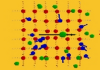
Microbes extract energy and nutrient supplies from rocks, yet the physical basis behind this is poorly understood. Understanding the impact of biology on rocks is essential to our ability to predict accurately many processes of global importance including the long term carbon cycle and soil formation by microbial rock weathering. In this project you will use statistical physics and computer simulations to model the growth of microbial populations on rocks. We expect interesting feedbacks to arise because as the microbes consume the rock, the spatial geometry of their environment changes, which in turn affects their growth. You will use these models to understand how microbes extract elements from rocks and develop approximations for rock alteration rates and weathering patterns, which can be compared with literature data and lab experiments being performed in Edinburgh. These models should greatly aid in understanding how microbes access the mineral components of rocks, how microbial biofilms might enhance or retard the acquisition of elements from rocks and could eventually allow new approaches to estimating the rates of rock deterioration in models of carbon cycling and soil formation.
The environment of outer space contains a variety of extremes including altered gravity, high levels of radiation and vacuum. All of these conditions, separately and in combination, influence biological systems. Many of these effects are poorly understood and questions remain such as ‘what effect do space conditions have on protein expression in bacteria?’,’ what influence do space conditions have on the interaction between microorganisms and substrates on which they grow?’. These questions address fundamental understandings of how biological systems behave in space and technical questions concerning the use of bacteria in space applications such as life support systems. You will use samples returned from space and ground-based experiments to contribute to European Space Agency space experiments on the International Space Station and other orbital platforms.
Microorganisms in the Earth’s crust use nutrient and energy supplies acquired from rocks, but how to do they access these resources and what role do they have in influencing the transformation of minerals and rocks on the Earth and in its subsurface? In this project you will carry out laboratory investigations on microbial interactions with rocks and investigate the way in which they extract elements at the biochemical level. You will develop physical models of microbial interactions with rocks to model the way in which microbes either retard or accelerate elemental fluxes across a rock fluid boundary and the impact of biofilms on this process.
Viruses are composite nanoparticles (~10 -100 nm diameter) comprising a core of genetic material (DNA or RNA) that is surrounded by thin protein shell (or capsid). Viruses are efficient at transferring their genetic material into a host cell and then hijacking the cell's machinery in order to reproduce. To act as efficient genetic transfer agents, viruses have to exhibit mechanical properties that enable them to withstand the high osmotic pressures of packaged DNA and strong shear flows as they travel around the body.
Potential projects will use experimental techniques, including neutron and x-ray scattering, to examine different physical aspects of virus behaviour:
(A) Relating mechanical response of viruses to structural and dynamical properties of the capsid
(B) Interaction of viruses and inorganic nanoparticles with real and model cell membranes
(C) Controlling virus self-assembly
Living cells are the most complex systems that can be studied by physical methods. Cells accomplish their central tasks by making use of the function of proteins, macro-molecular 'machines' whose dynamics enable, for instance, muscle contraction, nerve signal transduction and photosynthesis, to name only a few.
We are interested in understanding how the dynamics of proteins make biology work. You will use highly efficient parallel computers to simulate their motions, function and interactions in large-scale all-atom and multiscale simulations.
Possible projects include the molecular basis of antibiotic resistance,cell division and electric signalling across nerves. We are especially interested in how these phenomena are related to physical concepts such as phase transitions (e.g. lipid demixing in the cell wall) and to intracellular protein kinetics.
You will use unique, world-leading instrumentation, all developed in Edinburgh, to image the flow of very concentration suspensions at single-particle resolution in a variety of geometries. Understanding such flows is both industrially important as well as intellectually challenging: at first sight, there simply is no room for the particles to shear past each other! The project offers you the opportunity to become an expert in rheology (the science of the deformation and flow of complex fluids) as well as microscopy as well as image processing. There may be opportunities to work with our overseas collaborators, such as Prof Eric Weeks in Emory University, Atlanta.
Sticky colloidal particles aggregate. When conditions are right, they can form a stringy, space-spanning structure – a ‘gel’ – which behaves in many ways like a solid even though the sample may contain more than 90% liquid. Many personal care products and foods (e.g. yoghurt) are such gels. Recent theoretical advances have suggested that gels can form through a variety of ‘kinetic pathways’, the precise one being chosen being sensitively ‘tuneable’ by varying external conditions. Using a combination of experimental techniques, including microscopy and mechanical measurements, you will test these theoretical ideas in a very well characterized ‘model colloid’ developed in Edinburgh (and now adopted by many groups worldwide). There may be opportunities to work with various industrial partners.
Emulsions with well controlled properties are required for delivering drugs and other active ingredients; to make food and drink products, and in many other areas. The physics involved in understanding and controlling emulsions concerns matter on the meso-scale, fluid flow and the behaviour of interfaces. In this project you will carry out experiments to understand how emulsions stabilized by colloidal particles (Pickering emulsions) form. You will also aim to understand their behaviour while they flow.
Enhancing energy storage and conversion is vital to society, e.g. to power (future) portable devices, to store (renewable) energy from intermittent sources and to boost electric means of transportation. Hence, the next generation of batteries and fuel cells should provide higher energy densities and powers over extended lifetimes. Crucial components are the electrodes, which ideally provide a huge contact area between three channels of (1) reactant/fuel, (2) electrolyte and (3) electronic conductor. In this experimental project, you will develop novel 3D nanostructured foams for the fabrication of future electrodes, e.g. by squeezing emulsions stabilized by electrically conducting nanoparticles into biliquid foams. Using a range of (modern) materials characterization techniques, including confocal/electron microscopy and centrifugation, you will probe the structural, mechanical and electrochemical properties of these versatile foams. During this project you will also collaborate with battery material researchers at The University of St. Andrews.
During a previous project we invented a new class of soft material called the bijel. This has two convoluted liquid domains separated by a layer of interfacial particles. In this new project the aim is to investigate the case where two liquid domains are filled with polymer. We believe that using polymers will enable us to: prepare bijels without changing temperature or pressure; carry out real time imaging of the particles becoming trapped at the interface; answer the question "Are these structure permanently stable?" This will be an excellent opportunity to study meso-scale materials far from equilibrium.
Ensuring that the right proteins bind to each other is a vital part of building and running healthy cells. But unwanted protein aggregation can be fatal, such as the formation of ‘amyloid fibrils’ in various neurodegenerative diseases (Alzheimer, CJD, etc.) or the clouding of the eye lens in cataracts. Preliminary work suggests that very highly charged proteins may aggregate via a new, generic mechanism. You will use a collection of physical techniques (atomic force microscopy, light scattering, gel electrophoresis, etc.) to study the mechanism of such aggregation and the structure of aggregates formed.
The motility of the prototypical bacterium Escherichia coli in aqueous media is well understood. Bacteria, however, can also live in more complex liquids, such as concentrated polymer solutions (e.g. Salmonella swimming up the mucus in chicken oviduct to infect eggs). Such solutions are ‘viscoelastic’, i.e. they show properties of both viscous liquids and elastic solids. Little is known about how bacteria propel themselves through such media. You will use a range of biophysical techniques, e.g. dynamic light scattering and confocal microscopy, to investigate this problem, while at the same time acquiring a high level of skill in laboratory microbiology. There may be opportunities to work with Dr. Gary Bryant (Melbourne), an expert in using light scattering on optically turbid samples.
Communities of bacteria living together symbiotically in a ‘microcosm’ can be used as ‘living models’ to study a variety of ecological questions, e.g. how community structure evolves when the environment is fluctuating. The degree of control available to the experimentalist working on such systems means that the data produced can often be compared rather directly to theoretical models and/or computer simulations. Working with microbial ecologists, you will develop techniques to perform well-defined experiments in microbial ecology to investigate questions such as how the number of species supported by an ecosystem varies with the size of the system, or how the population structure recovers after dramatic environmental perturbation. There may be the opportunity to combine experiments with theoretical modelling and/or simulations supervised by Prof Graeme Ackland.
A new type of soft condensed matter, called 'active matter', arises in biological systems which continually convert one form of energy into another. Examples include subcellular networks of filaments and motors (the 'cytoskeleton'); and suspensions of swimming bacteria. Each contain self-propelled particles which tend to form ordered phases (the analogs of liquid crystals in conventional, passive materials). We have developed a range of simulation and theory tools to address these fascinating new materials. Models span from continuum descriptions of the new 'active liquid crystals' [1] to descriptions that resolve individual self-propelled particles with specified dynamical rules [2], coupled to fluid motion [3] or birth and death processes [4]. These models can give new insights into subcellular physics and into pattern formation in the growth of bacterial colonies. This theoretical project offers exciting opportunities for (a) a student interested in large scale computational physics [1,3] and/or for (b) a student who wishes to combine relatively lightweight numerics with analytical modelling work [2,4].
[1] Shearing Active Gels Close to the Isotropic-Nematic Transition, M. E. Cates, S. M. Fielding, D. Marenduzzo, E. Orlandini and J. M. Yeomans, Physical Review Letters 101,068102 (2008).
[2] Statistical Mechanics of Interacting Run-and-Tumble Particles, J. Tailleur and M. E. Cates, Physical Review Letters 100, 218103 (2008).
[3] Run and Tumble Particles with Hydrodynamics, R. W. Nash, R. Adhikari, J. Tailleur and M. E. Cates, Physical Review Letters 104, 258101 (2010).
[4] Arrested phase separation in reproducing bacteria creates a generic route to pattern formation, M. E. Cates, D. Marenduzzo, I. Pagonabarraga and J. Tailleur, Proc. Nat. Acad. Sci. USA 107, 11715 (2010).
Ecosystems, in which different populations grow and interact, are complex dynamical systems where the techniques of statistical and computational physics can greatly improve our understanding. Physicists have already made important contributions in this area, by developing simple model systems, most famously for predator-prey (Lotka-Volterra dynamics). However many questions remain, including: “what factors can promote cooperative rather than competitive interactions between species?”, “what generates and maintains the diversity of species that we observe in nature?” and “how sensitive are the dynamics of ecosystems to small perturbations?”.