
The School welcomes applications from both external and internal scientists interested in applying for latest round of UKRI Future Leader Fellowships.
We are keen to attract outstanding researchers from Edinburgh and across the world to join us as Research Fellows. We offer a high quality research environment and support for you in your fellowship application process.
Fellowship opportunities
The School operates an internal review process for the UKRI Future Leaders Fellowships with deadline:
Noon on Friday 6th March 2020.
Applications are also welcomed for other fellowship opportunities, which will be part of a later review process.
Application information
Candidates are expected to have a PhD in Physics, Astronomy or a related discipline, and in most cases a few years research experience, as well as the ability to present clear evidence of their potential to undertake leading research.
How to apply
Candidates must submit information including a 2 page Case for Support, CV and list of publications by Noon, 6th March 2020.
Submissions should be emailed to: fellowships-panel [at] ph.ed.ac.uk
If you have any queries concerning Fellowships please contact the Director of Research, Martin Evans (m.evans [at] ed.ac.uk).
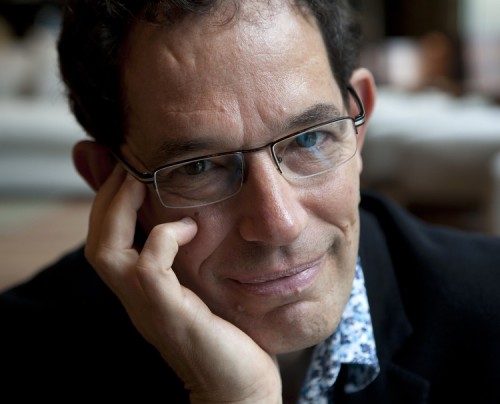
Professor Neil Turok, a world-leading researcher in theoretical physics and fundamental cosmology has been appointed as the Inaugural Higgs Chair by the University of Edinburgh. Professor Turok will be joining the Higgs Centre for Theoretical Physics in the School of Physics and Astronomy starting July 2020.
Neil Turok
Neil Turok (PhD Imperial College London, 1983) was Director of Perimeter Institute in Canada from 2008 to 2019. Under his leadership the institute grew into one of the strongest centres for theoretical physics worldwide. Earlier in his career Turok was Professor of Physics at Princeton University and Chair of Mathematical Physics at the University of Cambridge.
Born in South Africa, Turok founded the African Institute for Mathematical Sciences (AIMS) in Cape Town in 2003. AIMS has since graduated over 2000 students at Masters level and above and has expanded to a network of centres spanning the African continent.
Turok has made numerous contributions to theoretical physics and cosmology. His work is highly original and addresses some of physics’ most profound problems, such as the quantum mechanical formulation of gravity and the nature and origin of large-scale structure, dark energy and dark matter. Much of Turok’s theoretical work connects directly to experiment and observation. He predicted correlations between polarisation and temperature anisotropies of the cosmic background radiation, confirmed by the WMAP and Planck satellites. He helped verify the existence of dark energy through an independent test involving the correlation between galaxies and the cosmic microwave background.
The Higgs Centre for Theoretical Physics
The Higgs Centre for Theoretical Physics was established in 2012 following the discovery of the Higgs boson at CERN, building on the legacy of Peter Higgs and Edinburgh’s outstanding tradition. Its purpose is to promote research excellence in theoretical physics, aiming to answer fundamental questions about Nature by developing new ideas and concepts. Our vision is to create bridges between disciplines and combine graduate-school education in synergy with cutting-edge research. Accordingly, the Higgs Centre has launched highly successful masters programmes in theoretical and mathematical physics. In parallel, the Centre runs a diverse programme of workshops and schools, through which it has established itself as a global focal point in theoretical physics.
Turok’s joining the Higgs Centre will be associated with a considerable expansion of its activities, including new faculty positions and fellowships, details of which will be announced later this year.
New focus on the quantum universe
Turok brings to the Higgs Centre several new and highly promising research directions. This includes an ambitious research programme formulating quantum mechanical theories, in particular general relativity, using real-time path integrals. Turok recently proposed one of the simplest yet solutions to the problem of dark matter in cosmology, in terms of right-handed neutrinos. These research directions and others will see a new level of investment by the University, further enhancing theoretical physics in Edinburgh.
Professor Turok said:
I am deeply honoured to be taking up the Higgs Chair. Theoretical physics is one of science’s most fruitful disciplines: when our ideas work, their impact can be extraordinary. The field stands at an exciting juncture. A combination of observational advances and theoretical clues are guiding us towards a transformation in our understanding of the universe. The Higgs Centre’s excellent direction and the quality and scope of its programmes, within Edinburgh’s exhilarating setting and its outstanding scientific community, create opportunities to foster and develop brilliant new talent and to make major discoveries.
Professor Peter Mathieson, Principal and Vice-Chancellor of the University of Edinburgh reported:
We are delighted to appoint Neil Turok, one of the world’s foremost theoretical physicists, to our inaugural Higgs Chair. The University of Edinburgh has a proud record in fundamental physics, including the fabulous work of the eponymous Peter Higgs. I am confident that Neil can build on that legacy and lead us to further success.
Professor James Dunlop, Physics and Astronomy Head of School commented:
This is a landmark appointment for the School of Physics & Astronomy at the University of Edinburgh. Neil Turok is an internationally renowned physicist, also well known for his science outreach and educational work. We are very excited to welcome him to the School and the wider University. Neil will further enhance the already strong international reputation of the School and, with his breadth of expertise and research interests, can help forge new links between different areas of theoretical physics. We also look forward to developing new connections with Africa.
Professor Einan Gardi, Director of the Higgs Centre for Theoretical Physics said:
We are excited to welcome Neil Turok as the inaugural Higgs Chair. We believe that he will find a natural new home in the Higgs Centre for Theoretical Physics. His scientific vision, energy and enthusiasm, will help us promote excellence and generate a thriving environment in which a new generation of leading researchers can develop.
Recognition for contributions to science through the application of musical acoustics, particularly to the study of brass wind instruments.
The Acoustical Society of America was set up in 1929 to generate, disseminate, and promote the knowledge and practical applications of acoustics. The Society, which is a founding member of the American Institute of Physics, recognizes outstanding achievement in acoustics with several awards.
The Silver Medal is presented to individuals for contributions to the advancement of science, engineering, or human welfare through the application of acoustic principles, or through research accomplishments in acoustics.
Prof Campbell works with colleagues in the Audio And Acoustics Research Group on the physics and acoustics of musical instruments. This award recognizes the international reputation which the University of Edinburgh has acquired as a centre of research into the physics of brass wind musical instruments, and is a tribute to the contributions made by many PhD students who have worked in this field over the last three decades.
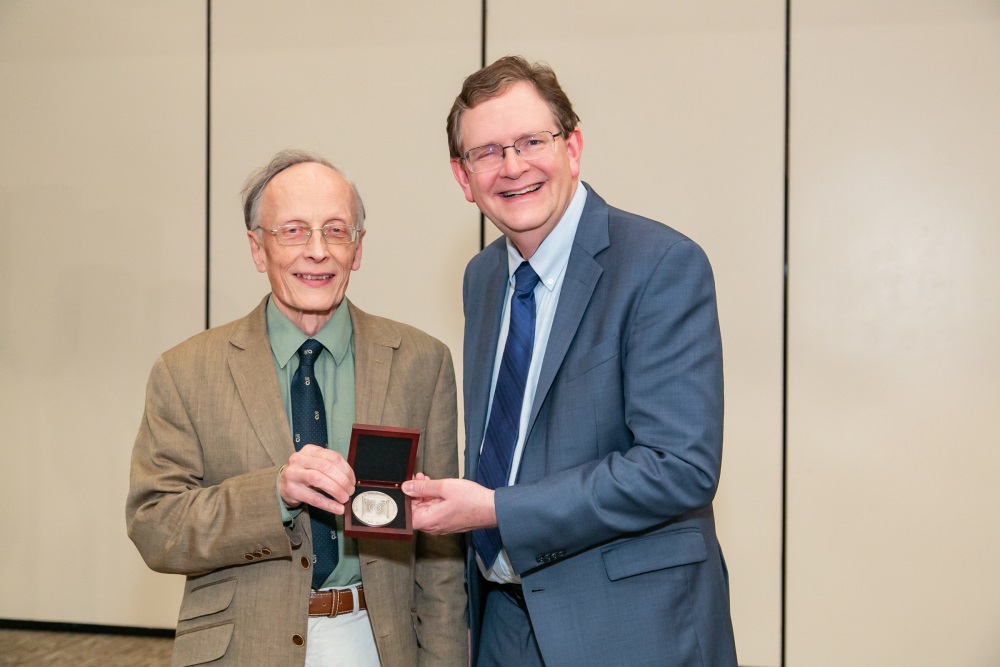
Prof Campbell was presented with the Silver Medal in Musical Acoustics at the meeting of the Acoustical Society of America in San Diego in December 2019. The citation reviewed his professional accomplishments, and concluded:
“Murray Campbell is a world-renowned acoustician, one of the most productive researchers in the field of musical acoustics, and has been a mentor to countless young scientists. His work is of the highest caliber, and his kindness and generosity are legendary in the community. Awarding Murray Campbell the Silver Medal is a deserved recognition of his may contributions to the advancement of our understanding of music and musical instruments, as well as his dedication to the development and education of the next generation of acousticians.”
Image gallery
The School of Physics and Astronomy was delighted to take part in the Midlothian Science Festival in October where we offered two physics-themed activities.
Escape room – locked in and clued up
Over 50 adults looked for clues to be able to escape from our specially designed physics lab within the time limit. The event was at times a bit stressful (on purpose!), but participants enjoyed the challenge. Many of the ‘prisoners’ in our lab were impressed to have been able to solve physics-related problems, with one participant reporting she "never would have thought she would have so much fun doing physics".
The escape room was designed by Cristina Cortes and Robbie Peal, undergraduate students who are members of our Physics Outreach Team, and our Ogden Outreach & NBIC Outreach Officer, Dr Jean-Christophe Denis.
Microbe mania
Our ‘Biofilms: Welcome to microbe city’ workshops attracted 60 children aged 6 to 10 and their families. Participants had the opportunity to undertake some biophysics research - a strong research strand in the School - through the National Biofilms Innovation Centre (NBIC). Workshops included designing the best combination of sticky tracks to avoiding rolling bacteria infecting a cathether, having a go at trying to remove ‘fake biofilms’ on giant mouth models, drawing what a microbial city might look like, and observing real biofilms under the microscopes. Apprentice biophysicists loved meeting researchers and learning about their work.
The event was designed and delivered by Dr Jean-Christophe Denis, and researchers, Prof. Cait MacPhee, Dr Gavin Melaugh and Dr Susana Direito, with the help of physics undergraduate students.
Six Higgs Scholarships are available to MSc applicants studying in 2020/21.
The School of Physics and Astronomy is pleased to announce that six Higgs Scholarships are available to MSc applicants who have applied to study with us in academic year 2020/21. These scholarships are available to applicants planning to study our MSc Particle & Nuclear Physics, MSc Theoretical Physics or MSc Mathematical Physics programme. Each scholarship has a value of £5,000. The value of the award will be deducted from tuition fees.
These scholarships will be awarded on the basis of academic merit to students of any nationality. Candidates must have, or expect to obtain, a UK first-class honours degree or its international equivalent.
The deadline for applying for this scholarship is 1 June 2020.
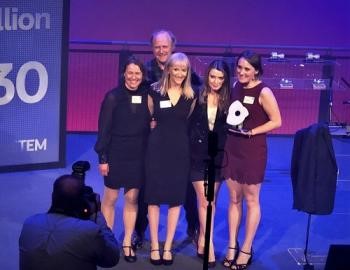
Congratulations to Castleview Primary School for being the overall winner of the 2019 Rolls Royce Science Prize and winner of the Eden Award.
Castleview Primary is a local school situated less than 2 miles away from the School of Physics and Astronomy, and a community partner we have worked closely with for the past 3 years.
Rolls Royce Science Prize
The Rolls-Royce Science Prize recognises excellence in science teaching across the full spectrum of teaching contexts. It also seeks to promote sustainable teaching ideas that address specific needs in schools and contribute to teachers’ continuing professional development.
Science engagement
Castleview Primary School had been shortlisted as one of six finalists for their project ‘People like me can do STEM’. The aim of this project was to raise aspirations and increase pupils’ confidence in STEM. Based in Craigmillar, an area of multiple deprivation in Edinburgh, the school recognised that their pupils’ science capital was not the same as others and saw it as their job to build it. In order to achieve this, the project sought to get the entire school and their families excited about science and create on-going partnerships with local STEM institutions.
Dr Jean-Christophe Denis (School of Physics and Astronomy’s Ogden Outreach Officer) and physics students and staff worked alongside colleagues from the University’s MRC Centre for Regenerative Medicine in delivering a range of science engagement activities, including the community science festival and science clubs.
Jean-Christophe, who lives in Craigmillar and is known within Castleview Primary as the ‘local physicist’ said:
The School of Physics and Astronomy is one of the world leading physics academic centres, and it's important that young people in the neighbourhood have the chance to access world class STEM education and opportunities. I am very pleased that our community engagement efforts have been recognised by such a prestigious award.
Kate Carter, class teacher at Castleview Primary School and project lead for the Rolls Royce Science Prize said:
We are all so proud, it is such a privilege. The award acknowledges with loud celebration that the UK STEM community share our belief that our young people deserve the same opportunities to develop science capital as others and that our innovative community approach is both pioneering and successful in achieving this.
The judges praised Castleview Primary School for their efforts to change preconceptions on who can be a scientist and for helping to raise positive ambitions by building relationships. They also highlighted the partnership approach and the involvement of parents. The project resulted in a 20% increase in students enjoying STEM and wanting to do STEM related roles, with parent’s perceptions of science positively increasing by 100%.
Eden Award
The Eden Award, selected by Sir Tim Smit, co-founder of the Eden Project, recognises the most environmentally focused project. This award highlighted Castleview Primary School’s belief in their young people and in the development of sustainable communities, recognising the neighbouring connection and partnership with Edinburgh BioQuarter and The University of Edinburgh.
Image gallery
New findings could aid the search for extraterrestrial life during future missions to Mars by making it easier to distinguish between fossils and non-biological structures.
Research which suggests that structures previously thought to be fossils may, in fact, be mineral deposits, could save future Mars missions valuable time and resources. Microscopic tubes and filaments that resemble the remains of tiny creatures may have been formed by chemical reactions involving iron-rich minerals, the study shows. Previous research had suggested that such structures were among the oldest fossils on Earth.
The discovery was made by astrobiologist Dr Sean McMahon, who is developing techniques to seek evidence that life once existed on Mars. He created tiny formations in the lab that closely mimic the shape and chemical composition of iron-rich structures commonly found in Mars-like rocks on Earth, where some examples are thought to be around four billion years old.
Dr McMahon created the complex structures by mixing iron-rich particles with alkaline liquids containing the chemicals silicate or carbonate.
This process – known as chemical gardening – is thought to occur naturally where these chemicals abound. It can occur in hydrothermal vents on the seabed and when deep groundwater circulates through pores and fractures in rocks.
His findings suggest that structure alone is not sufficient to confirm whether or not microscopic life-like formations are fossils. More research will be needed to say exactly how they were formed.
The study, published in the journal Proceedings of the Royal Society B, was funded by the European Union’s Horizon 2020 programme.
Dr Sean McMahon said:
Chemical reactions like these have been studied for hundreds of years but they had not previously been shown to mimic these tiny iron-rich structures inside rocks. These results call for a re-examination of many ancient real-world examples to see if they are more likely to be fossils or non-biological mineral deposits.
Astronomers at the University of Edinburgh’s Institute for Astronomy are currently studying an unusual comet. Known as 2I/Borisov, this comet is only the second one in history to be shown to have come from beyond our Solar System, following the discovery two years ago of 1I/‘Oumuamua.
While the first Interstellar Object (ISO) had very strange properties - it was small and had a very elongated shape, and showed almost no evidence of comet-like activity - Borisov appears more like the comets of our own Solar System. It shows a clear coma and tail, and this has allowed astronomers to measure its composition, through spectroscopic investigation of the unique signatures of gasses in the coma.
Edinburgh astronomers Cyrielle Opitom and Colin Snodgrass have been studying the comet using the UK’s telescopes in the Canary Islands (the Isaac Newton and William Herschel telescopes), and are now training the European Southern Observatory’s ‘Very Large Telescope’ (one of the most powerful in the world) on the comet as it moves into Southern hemisphere skies.
Results so far indicate that, despite its origin in the planetary system around a distant star, comet Borisov has a composition quite similar to our own Solar System’s comets. It appears to be closest in composition to a class of comets known as ‘carbon chain depleted’, which make up around a third of Solar System comets, and tend to come from the Kuiper Belt of icy bodies at the edge of the planetary region (the region where Pluto is found), rather than the much more distant Oort cloud at the very edge of the Sun’s influence, which is the source of long period comets.
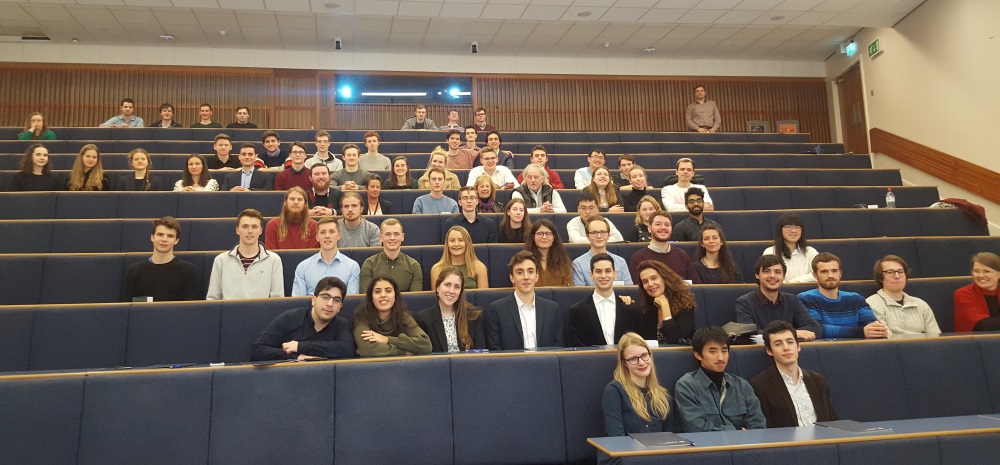
Congratulations to students who received Medals, Certificates, Prizes and Scholarships at the School of Physics & Astronomy Undergraduate Student Awards Ceremony.
Head of School, Prof Jim Dunlop presented the awards to students in recognition of their outstanding marks and achievements in the last academic year.
Certificates & Medals
36 pre-honours students received certificates of merit for their achievement in Physics and Maths courses in years 1 & 2. A total of 20 Class Medals were awarded to the students with the highest overall mark for their degree programme.
Prizes, Bursaries & Scholarships
31 Prizes, Bursaries and Scholarships were awarded to students. Recipients included William Lindved and Tommaso Bruggi who were both presented with a Nichol Foundation Scholarship and Marion A S Ross Prize. These are awarded to Junior Honours students with the highest marks. The Margaret Ann Stewart Memorial Prize, for the graduating student with the highest overall mark across all degree programmes, was awarded to Maria Derda.
Many congratulations to all recipients.
Image gallery
The University of Edinburgh has received £650,000 to provide essential contributions to the DUNE experiment.
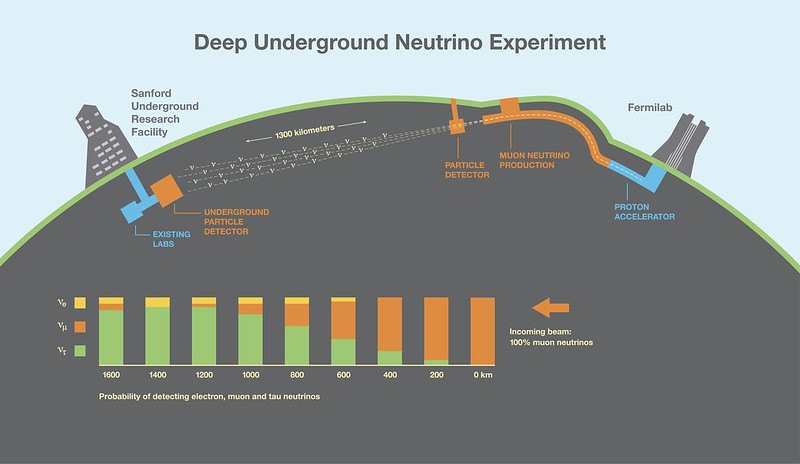
This is part of a UK multi-million pound investment in a global science project that brings together the scientific communities of the UK and 31 countries from Asia, Europe and the Americas to build the world’s most advanced neutrino observatory. DUNE (the Deep Underground Neutrino Experiment) is a flagship international experiment hosted by the United States Department of Energy’s Fermilab, which will be designed and operated by a collaboration of over 1,000 physicists.
Professor Stefan Söldner-Rembold of the University of Manchester, who leads the international DUNE collaboration as one of its spokespersons, commented:
DUNE has the unique potential to answer fundamental questions that overlap particle physics, astrophysics, and cosmology.
This £30M investment from UK Research and Innovations’ Science and Technology Facilities Council (STFC) is a four-year construction grant to 13 UK educational institutions and to STFC’s Rutherford Appleton and Daresbury Laboratories. UK scientists and engineers will design and produce components at the core of the DUNE detector, which will comprise four large tanks each containing 17,000 kg of liquid argon. The UK groups are also developing a state-of-the art, high speed data acquisition system, together with the computing systems and sophisticated software needed to record, interpret and exploit the data.
The University of Edinburgh’s School of Physics and Astronomy is constructing the computing and software infrastructure to process and simulate the data that will be recorded. The scale of DUNE will be second only to that of the LHC (Large Hadron Collider) programme, necessitating a global distributed system based upon the Worldwide Computing Grid. Edinburgh physicists and software engineers are working on the complex globally distributed data management system needed to catalogue and deliver the multi peta-Byte data sets to large data centres, as well as the development of artificial intelligence systems for recognising signals in the detector coming from neutrino interactions.
Neutrinos will be produced at Fermilab and fired through the earth to re-emerge some 1300km later in the underground mine where DUNE is situated. DUNE will study the behaviour of these neutrinos and their antimatter counterparts, antineutrinos. This will provide insight as to why we live in a matter-dominated universe where antimatter has largely disappeared. DUNE will also watch for neutrinos from supernovae, and will investigate whether protons live forever or eventually decay, bringing us closer to fulfilling Einstein’s dream of a grand unified theory.
Professor Peter Clarke, the DUNE lead at the University of Edinburgh commented:
This award is excellent news for the Particle Physics Group here in Edinburgh. DUNE will set a new standard for neutrino detector technology. It is particularly exciting to know that we will become part of an experiment that may discover matter antimatter asymmetry in neutrino interactions, as well as become part of the global supernova watching community.
Professor Franz Muheim, of the Particle Physics Experiment group said:
Neutrinos are fascinating particles and the scale of the experiment poses an exciting challenge to record the information from the detectors.
The UK universities involved in the project are: Birmingham, Bristol, Cambridge, Edinburgh, Imperial College London, Lancaster, Liverpool, Manchester, Oxford, Sheffield, Sussex, University College London and Warwick.